
Pigmentation Treatment: How Aesthetic Clinics Help Achieve Brighter Skin

Uneven skin tone, dark spots, and pigmentation are some of the most common skin concerns faced by many people. While skincare products can help improve skin appearance, stubborn pigmentation often requires professional assessment and advanced treatments from a skin aesthetic clinic.
At a professional aesthetic clinic, doctors can identify the type and cause of pigmentation before recommending suitable treatments to help achieve clearer, brighter, and more even-looking skin.
What Is Skin Pigmentation?
Skin pigmentation refers to the colouring of the skin caused by melanin, the natural pigment produced by our skin cells. When melanin production becomes uneven or excessive, it can result in dark patches, spots, or uneven skin tone.
Common types of pigmentation include:
- Sunspots (Solar Lentigines)
Long-term exposure to UV rays can trigger dark spots, commonly appearing on areas frequently exposed to sunlight, such as the face, neck, and hands. - Melasma
Melasma appears as brown or greyish patches, often on the cheeks, forehead, and upper lip. It is commonly linked to hormonal changes, sun exposure, and genetics. - Post-Inflammatory Hyperpigmentation (PIH)
Dark marks can develop after acne, injuries, or skin irritation. These marks may remain even after the original skin problem has healed.
What Causes Pigmentation?
Several factors can contribute to pigmentation issues:
- Sun Exposure
UV rays stimulate melanin production, causing existing pigmentation to become darker and new spots to appear. - Hormonal Changes
Hormonal fluctuations during pregnancy, birth control use, or other changes can trigger melasma. - Acne and Skin Inflammation
Picking pimples or experiencing repeated inflammation can leave behind stubborn dark marks. - Incorrect Skincare Usage
Over-exfoliating or using harsh products may damage the skin barrier and worsen uneven skin tone
Popular Pigmentation Treatments at Skin Aesthetic Clinics
A skin aesthetic clinic offers various treatments depending on the type and severity of pigmentation.
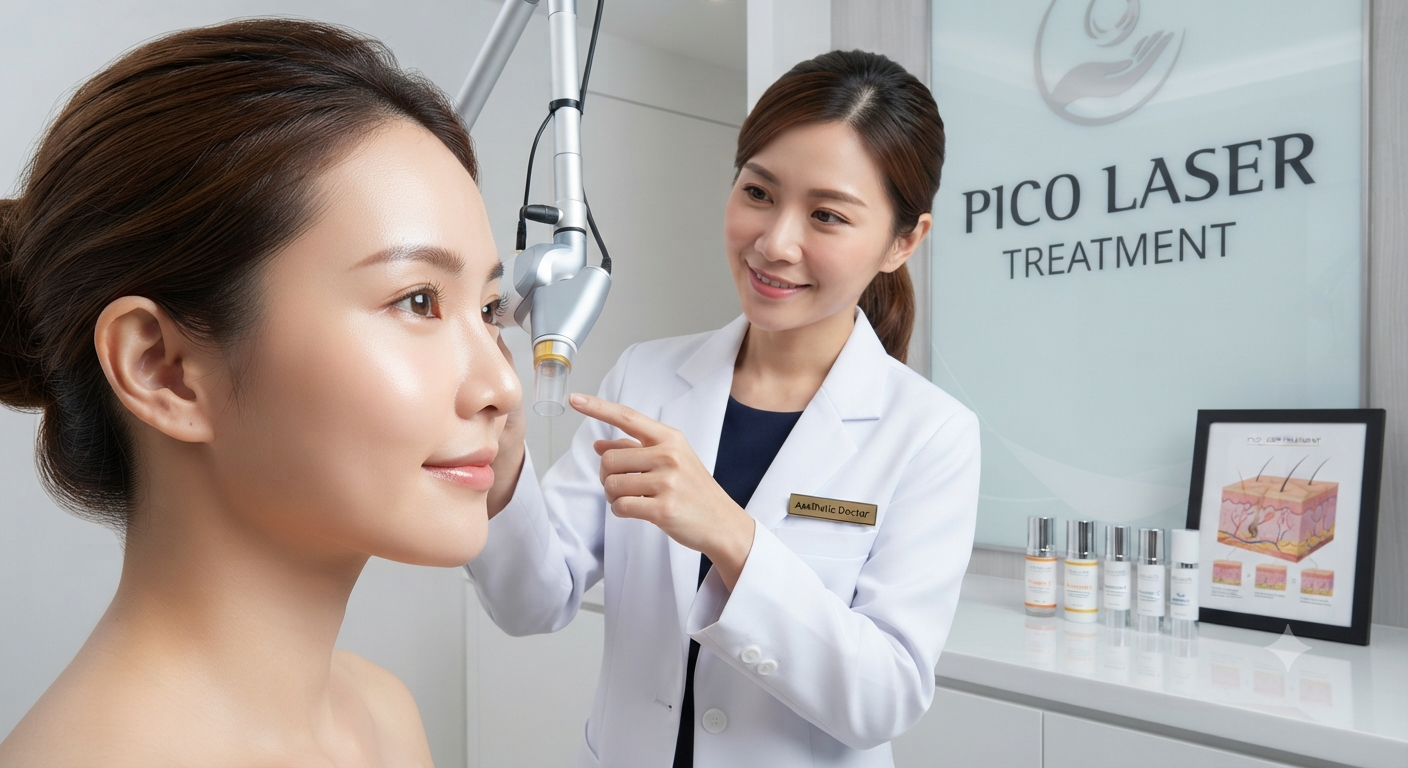
Pico laser is a popular pigmentation treatment that uses ultra-short laser pulses to target pigmentation beneath the skin.
Benefits may include:
- Helps reduce dark spots
- Improves uneven skin tone
- Supports brighter-looking skin
- Requires minimal downtime
Multiple sessions may be recommended depending on the pigmentation type.
Laser toning uses gentle laser energy to target excess melanin while helping improve overall skin clarity. It is often considered for:
- Mild pigmentation
- Uneven skin tone
- Dull-looking skin
Chemical peels use specially formulated solutions to remove damaged surface skin cells and encourage skin renewal.
They may help with:
- Pigmentation caused by acne
- Dull complexion
- Uneven texture
Aesthetic doctors may recommend prescription or medical-grade skincare containing ingredients such as:
- Kojic acid
- Vitamin C
- Retinoids
- Azelaic acid
- Niacinamide
These ingredients can help support pigmentation management when used correctly.
Why Visit a Skin Aesthetic Clinic for Pigmentation?
Many people try multiple brightening products without seeing results because pigmentation can have different causes.
A consultation at a skin aesthetic clinic allows professionals to:
- Identify the type of pigmentation
- Recommend suitable treatments
- Create a personalised skincare plan
- Reduce the risk of worsening pigmentation
- Monitor skin progress over time
How to Prevent Pigmentation From Returning
Even after treatment, prevention is important.
- Use Sunscreen Daily
A broad-spectrum sunscreen helps protect skin from UV damage, which is one of the biggest triggers for pigmentation. - Avoid Over-Exfoliating
Excessive scrubbing can irritate the skin and worsen dark marks. - Maintain a Consistent Skincare Routine
Using suitable products regularly helps maintain healthier and more balanced skin.
Frequently Asked Questions (FAQ)
How long does pigmentation treatment take to work?
Results vary depending on the type of pigmentation and treatment used. Some improvements may be seen after several sessions, while stubborn pigmentation may require longer management.
Is pigmentation treatment painful?
Most aesthetic treatments are generally well tolerated. Some patients may experience mild warmth, tingling, or temporary redness after certain procedures.
Can pigmentation come back after treatment?
Yes, pigmentation can return if triggers such as sun exposure and hormonal factors are not managed. Maintenance skincare and sun protection are important.
What is the best treatment for pigmentation?
The best treatment depends on whether the pigmentation is melasma, sunspots, or acne-related marks. A consultation with a qualified aesthetic doctor can help determine the right approach.